Guides
Trekking in Kyrgyzstan: routes, seasons and altitude
Trekking in Kyrgyzstan, from a level river path in Ala-Archa to the pass above Ala-Kul at nearly 4,000 m: which routes suit which level, when the snow clears, and what the nights ask of you.
Most of Kyrgyzstan is mountain and most of those mountains have no road into them, so walking is the ordinary way to see the country. The gap between an afternoon by a river and a pass at nearly 4,000 m is wide, though.
Easy days and first walks
Ala-Archa, some 40 km south of Bishkek, is where most people take their first walk. The road ends at about 2,100 m, where a level river path suits anyone and the steeper lines begin.
- The climb to the Ak-Sai waterfall, a steady uphill on a well-used path and the standard day out here.
- The continuation to the climbers' hut at around 3,300 m: about 1,200 m of ascent, a full day on the hill.
The other place you can walk without assembling an expedition is Jyrgalan, a former mining village at about 2,300 m with marked trails and maps.
The multi-day classics
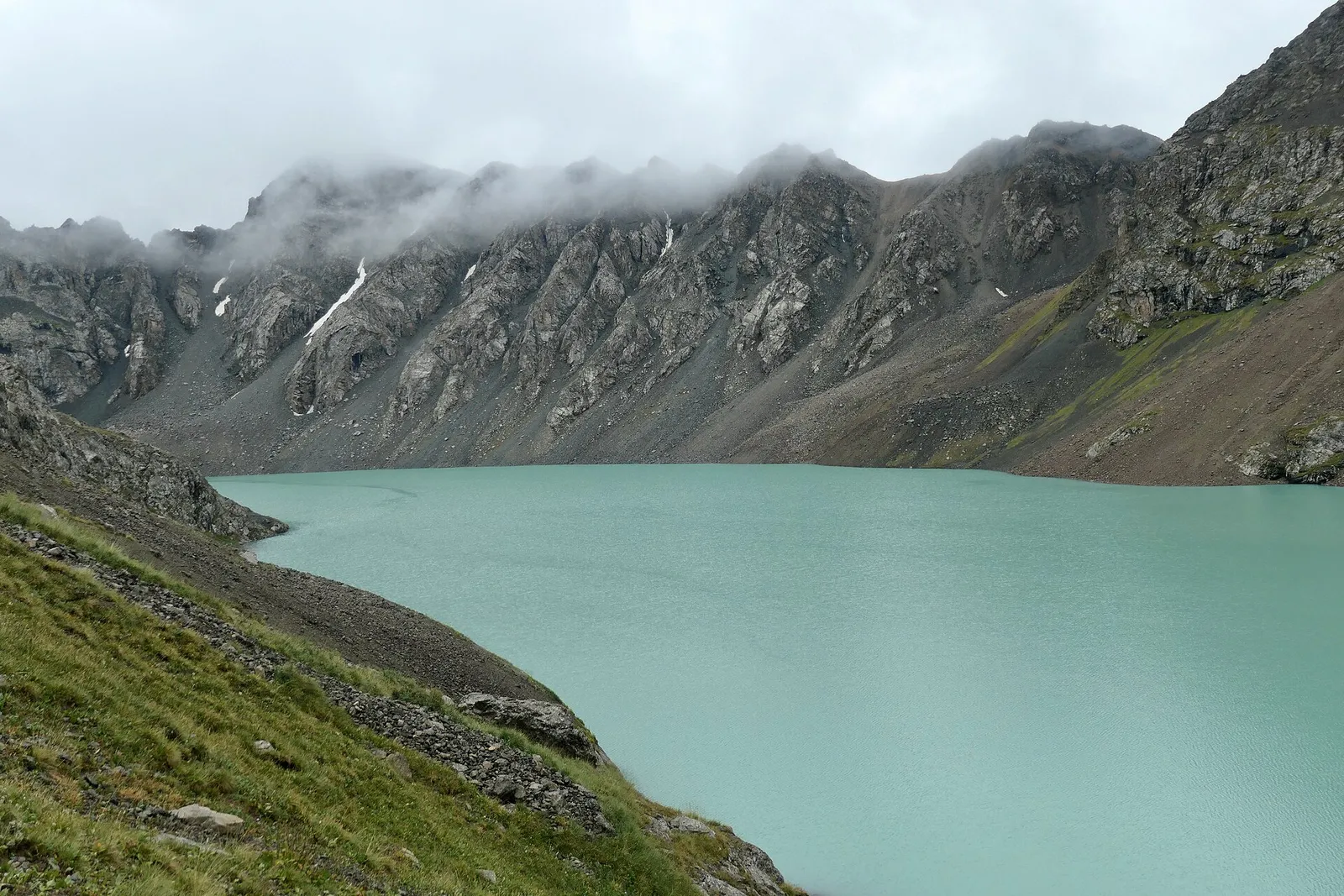
The best-known trek reaches Ala-Kul, a glacial lake at about 3,560 m, then crosses the pass behind it into the hot-spring valley of Altyn-Arashan over two or three days.
- Karakol gorge trailhead to the camping meadow part-way up: 16 to 18 km, five to eight hours.
- That meadow to the lake: a further 3 to 8 km, 600 to 1,000 m of climbing, two to six hours.
- Over the Ala-Kul pass at about 3,860 to 3,950 m and down to the springs: the loosest ground is on the far side.
Altyn-Arashan works on its own for one hard day rather than three: the walk in from Ak-Suu village is 15 to 16 km with about 1,200 m of ascent, four to seven hours. In the Alay the walking starts higher still. From Achik-Tash, a meadow at roughly 3,600 m under Lenin Peak, the acclimatisation route crosses Traveller's Pass at about 4,100 m in a day, inside a border zone whose permit takes weeks. The rock art at Saimaluu-Tash is five hours on foot above its trailhead, at around 3,200 m, with a night in a tent.
When the trails are open
Snow on the passes sets the season. The Ala-Kul route is normally walkable from the start of July to the middle or end of September, late June after a warm spring, and its camps are staffed mainly in July and August. Ala-Archa opens from June, the Alay camps from mid-June. Snow falls high up in any summer month. When to go has the calendar.
Altitude, and when to turn round
Above about 3,000 m most people notice something: headache, broken sleep, breathlessness on any slope, less appetite. That is common and settles if you climb slowly and rest. What is not common is symptoms that worsen instead of easing: a headache that will not lift, vomiting, confusion, an unsteady walk, breathlessness at rest. Altitude illness can turn serious fast, and the answer is to go down at once and with company, not to wait and see. Gain height gradually, sleep lower before a high camp, drink plenty, keep the first day easy. Talk to your doctor beforehand, especially if you take regular medication or have a heart or lung condition. Safety and altitude has more.
Nights, weather and kit
Nights by Ala-Kul are below freezing even in July, and so are nights in the Alay. Nothing is sold on these routes, most have no signal, and there is no shelter on the passes. What to pack has the full list.
- A warm layer and a shell, plus a sleeping bag rated well below freezing if you camp.
- Boots with ankle support and grip; the descents are loose.
- Food for the route, cash in som, offline maps, a head torch.
What a guided trek looks like
A guided trek covers the transfer to the trailhead, the park formalities, food, and someone who knows the line when cloud sits on the pass. Horses carry baggage on much of the Karakol route, though you still walk it. On our seven-day classic route the Ala-Kul day runs that way.
Good to know
Questions travellers ask
- Do I need to be an experienced hiker to trek in Kyrgyzstan?
- Not for the day walks. Ala-Archa has a level river path anyone can manage, and the marked trails at Jyrgalan are walkable without a guide. The multi-day routes are another matter: Ala-Kul means five to eight hours of walking on the first day alone, a pass near 3,900 m and loose ground on the descent. Regular hill walking at home is the honest minimum for those.
- How long does the Ala-Kul trek take?
- Two or three days in the usual direction. From the Karakol gorge trailhead to the camping meadow part-way up is 16 to 18 km and five to eight hours; the lake is a further 3 to 8 km with 600 to 1,000 m of climbing, two to six hours. Then the pass at about 3,860 to 3,950 m and the descent to Altyn-Arashan. Very fit walkers with a guide and a vehicle transfer sometimes do the lake and back in one long day.
- When is the trekking season in Kyrgyzstan?
- High routes open late. The Ala-Kul crossing is normally clear from about the start of July to the middle or end of September, with late June possible after a warm spring, and the yurt camps on it are staffed mainly in July and August. Ala-Archa is walkable from June; the Alay camps run from mid-June to the end of September. Snow can fall on the passes in any summer month.
- Can I trek in Kyrgyzstan without camping?
- On some routes. Ala-Kul can be split between yurt camps in July and August, and Altyn-Arashan has yurts, wooden huts and small family places all season. Jyrgalan is walked from the village with beds each night. But camps are seasonal and fill up in August, and on routes such as Saimaluu-Tash there is no shelter at all, so a tent is part of the plan.
- How serious is the altitude on Kyrgyz treks?
- Serious enough to plan around. Ala-Kul sits at 3,560 m with a pass above it near 3,900 m, and the Alay walks start at 3,500 m and go higher. Headache, broken sleep and breathlessness are common and usually settle. Symptoms that worsen — persistent headache, vomiting, confusion, an unsteady walk — mean descending straight away. Talk to your doctor before you travel.
- Do I need a guide to trek in Kyrgyzstan?
- Not by law, and the main trails are well used in season. A guide earns their place on the passes, where the line is unclear in cloud or old snow, and in the logistics: the transfer to the trailhead, the park formalities, food and the beds at the far end. Border-zone areas such as Kel-Suu and Lenin Peak need a stamped permit arranged weeks ahead, which an operator handles.
Guides
Read next
Horse riding in Kyrgyzstan: rides, seasons and skills
Horse riding in Kyrgyzstan, from an hour with a herder at Song-Kul to a three-day crossing in the walnut forest: what the horses are like, what riders need, and when the pastures open.
Staying in a yurt in Kyrgyzstan: what it is really like
What a night in a Kyrgyz yurt camp actually involves: felt walls and floor mattresses, no mains power, an outdoor toilet, freezing nights at 3,000 m and a herding family cooking next door.
Kyrgyzstan in winter: what is open and where to ski
Kyrgyzstan in winter: what closes from October, where the backcountry skiing is, why Issyk-Kul never freezes, and which passes stay open once the yurt camps have come down.
Your route is one conversation away
Tell us your dates, your pace and what you would like to see. We will put together a route from our own suppliers.