Guides
Staying in a yurt in Kyrgyzstan: what it is really like
What a night in a Kyrgyz yurt camp actually involves: felt walls and floor mattresses, no mains power, an outdoor toilet, freezing nights at 3,000 m and a herding family cooking next door.
A yurt is not a themed hotel room. It is the house that herding families take up to the summer pastures in spring and take down in autumn, and a camp is a few of them pitched beside a family that is also up there working. That answers most of the questions people arrive with.
What a yurt actually is
A round frame of bent wood — lattice walls, long roof poles and a wheel at the top that lets the smoke out and the light in — covered in felt and canvas and lashed down with woven bands. In the village of Kyzyl-Tuu near Bokonbaevo families still cut and bend those frames by hand and will raise one in front of you. Inside there are no partitions: mattresses lie on the floor around the wall and a stove stands in the middle.
A night in a camp
Most camps put you in a shared yurt with four to six mattresses, and some have two-person yurts. You eat what the family cooks, at a common table, at a set hour. Beyond that, expect less than a guesthouse.
- No mains power. A generator or solar panel may run lights for part of the evening.
- An outdoor toilet, and washing from a basin. A few camps have a shower; most do not.
- No shop and no cash machine, so carry som in cash.
- Patchy mobile signal at best, and none at all in several valleys.
Where the camps are
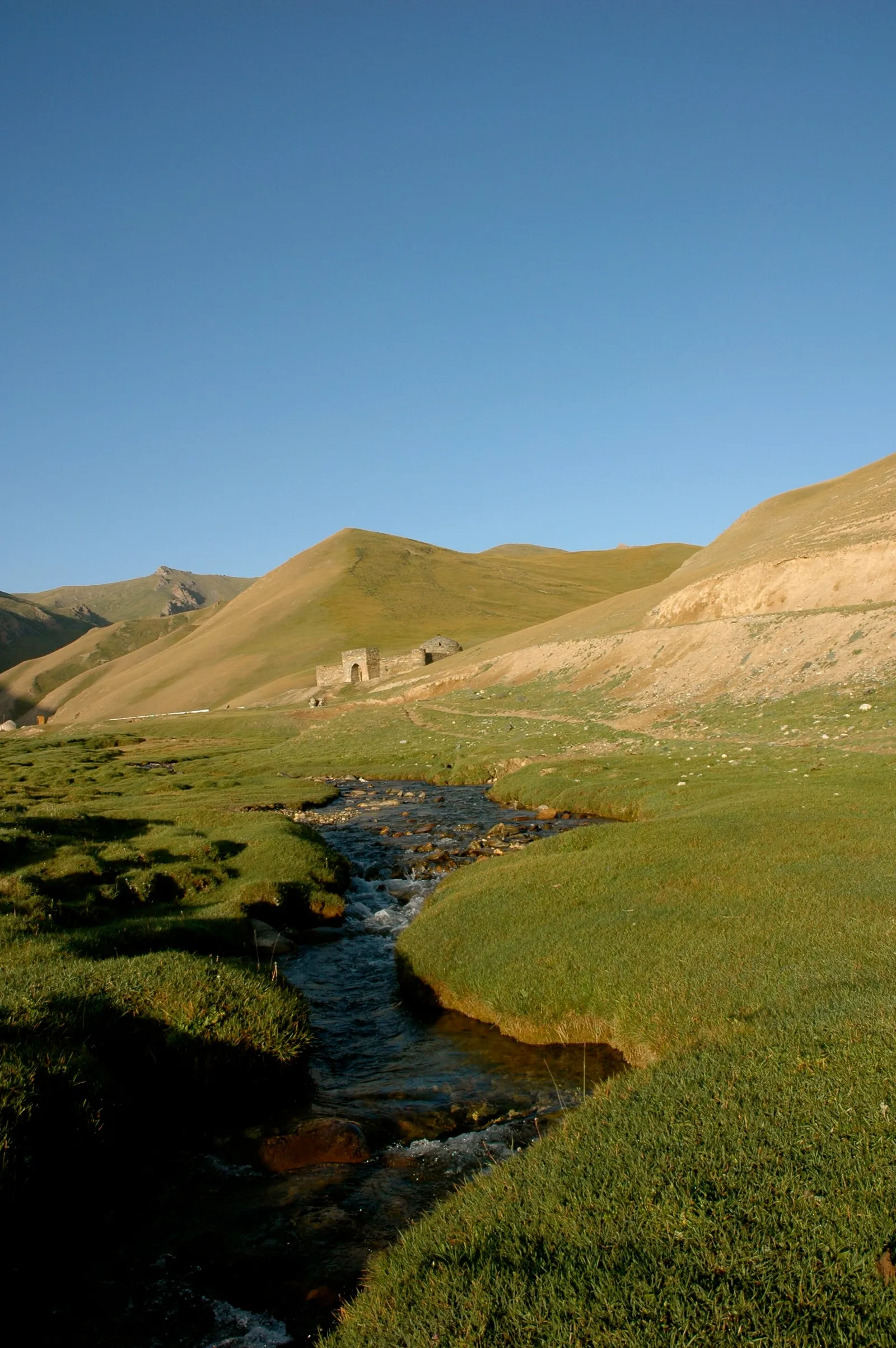
The best known stand at Song-Kul, a lake at 3,016 m ringed by open pasture, where the work of the camp — milking, making kymyz, baking bread — goes on around you. Tash-Rabat has camps a short walk from a 15th-century caravanserai at about 3,200 m. Altyn-Arashan, at 2,450 m, mixes yurts with wooden trekking huts and has hot springs piped into bathhouses, which makes it the most comfortable of the high options. Further out, camps in the Kok-Kiya valley serve Kel-Suu, and the shore of Tulpar-Kul at about 3,500 m carries camps under Lenin Peak. Lower and warmer are those on the south shore of Issyk-Kul and in the Jeti-Oguz gorge.
Season and nights
Almost all of it is summer only: Song-Kul from about mid-June to mid-September, Tash-Rabat from June to September, Kel-Suu from late June to early or mid-September, Tulpar-Kul from around 10 June to the end of September. At 3,000 m and above, nights drop below freezing even in July, so bring a warm layer to sleep in whatever the camp provides and expect the stove to go out before morning; what to pack has the detail. If you have come straight up from a city that day, take the first afternoon slowly. A headache, broken sleep and breathlessness are common at these heights and usually settle, but symptoms that keep getting worse are serious and the answer is to go down rather than wait it out. Ask your own doctor before the trip if you have a medical condition or take regular medication.
Manners
The pasture is a workplace, not a campsite with a view. Greet the family, take your shoes off at the door, accept the bowl of tea or kymyz that arrives, and keep clear of the animals in the morning. If you are camping, pitch away from the herders' yurts and carry your rubbish back out. Food and etiquette covers how meals work.
Booking, and the guided version
Camps are family businesses with no website and often no signal, so they are booked through a local office or an operator, and arriving unannounced at a full camp in August is a poor plan. A guided trip holds the beds, brings the 4x4 that the passes to Song-Kul and Kel-Suu require, and handles the cash side. Our three-day Song-Kul trip is two nights in a camp with a day on horseback in between. If the nights sound too cold, the year-round alternative is a family guesthouse in a village.
Good to know
Questions travellers ask
- What is a yurt?
- A round, portable house: a lattice frame of bent wood with long roof poles meeting a wheel at the top, covered in felt and canvas and tied down with woven bands. Herding families put them up on the summer pastures and take them down in autumn. There are no interior walls; mattresses go on the floor around the edge and a stove stands in the middle.
- Is there a toilet and a shower at a yurt camp?
- There is an outdoor toilet, usually a wooden cabin a short walk from the yurts. Washing is generally from a basin, with water heated on the stove if you ask. A few camps have built a shower; most have not, and the high ones at Song-Kul, Tash-Rabat and Kel-Suu usually have neither mains power nor running hot water.
- Will I be cold at night in a yurt?
- At altitude, yes, unless you plan for it. Song-Kul is at 3,016 m and Tulpar-Kul at about 3,500 m, where nights fall below freezing even in July. Camps provide mattresses and heavy blankets, and the stove is lit in the evening but goes out before morning. Bring a warm layer to sleep in; a light sleeping bag on top of the bedding solves it.
- What do you eat at a yurt camp?
- Whatever the family cooks, served at a common table at a set time: bread, tea, fresh and soured dairy, soup, rice or noodle dishes with mutton. Kymyz, fermented mare's milk, is offered in summer and is an acquired taste. Vegetarians are accommodated better if the camp is told in advance, since nothing can be bought once you are up there.
- Can you stay in a yurt in Kyrgyzstan in winter?
- Mostly no. The camps are seasonal and come down with the herders: Song-Kul runs from about mid-June to mid-September, Kel-Suu and Tulpar-Kul only a little longer. A few camps in the Jeti-Oguz gorge stay open through the snow, and some village guesthouses keep a yurt in the yard, but the year-round option in the mountains is a family guesthouse.
- Are yurt camps suitable for children or older travellers?
- The camps themselves are, since you sleep on the floor in a warm room and the family looks after guests. The altitude and the journey are the harder parts: Song-Kul means three hours of gravel over a 3,446 m pass, and the lake sits at 3,016 m. Anyone with a heart or lung condition should talk to their doctor before booking a night that high.
Guides
Read next
Kyrgyzstan in winter: what is open and where to ski
Kyrgyzstan in winter: what closes from October, where the backcountry skiing is, why Issyk-Kul never freezes, and which passes stay open once the yurt camps have come down.
What to pack for Kyrgyzstan
Kyrgyzstan asks you to dress for a 30-degree afternoon in the Fergana valley and a night close to freezing at 3,000 m, often in the same week.
Safety, health and altitude in Kyrgyzstan
A calm look at what actually goes wrong in Kyrgyzstan: thin air above 3,000 m, mountain weather, rough roads and river fords, and the border zones where a permit is compulsory.
Your route is one conversation away
Tell us your dates, your pace and what you would like to see. We will put together a route from our own suppliers.