3 days
Song-Kul yurts, 3 days
Two nights in a yurt camp on Song-Kul lake at 3,016 m, a day on horseback across the summer pastures and a felt-making demonstration in Kochkor on the way.
Three days, two of them largely on the road, for travellers with a short week who want the pastures rather than the towns. It is the least demanding trip we run: no trekking, as much or as little time in the saddle as you like, and a camp on the lakeshore where the evening is the light going off the water and a sky with nothing around to spoil it.
What the days feel like
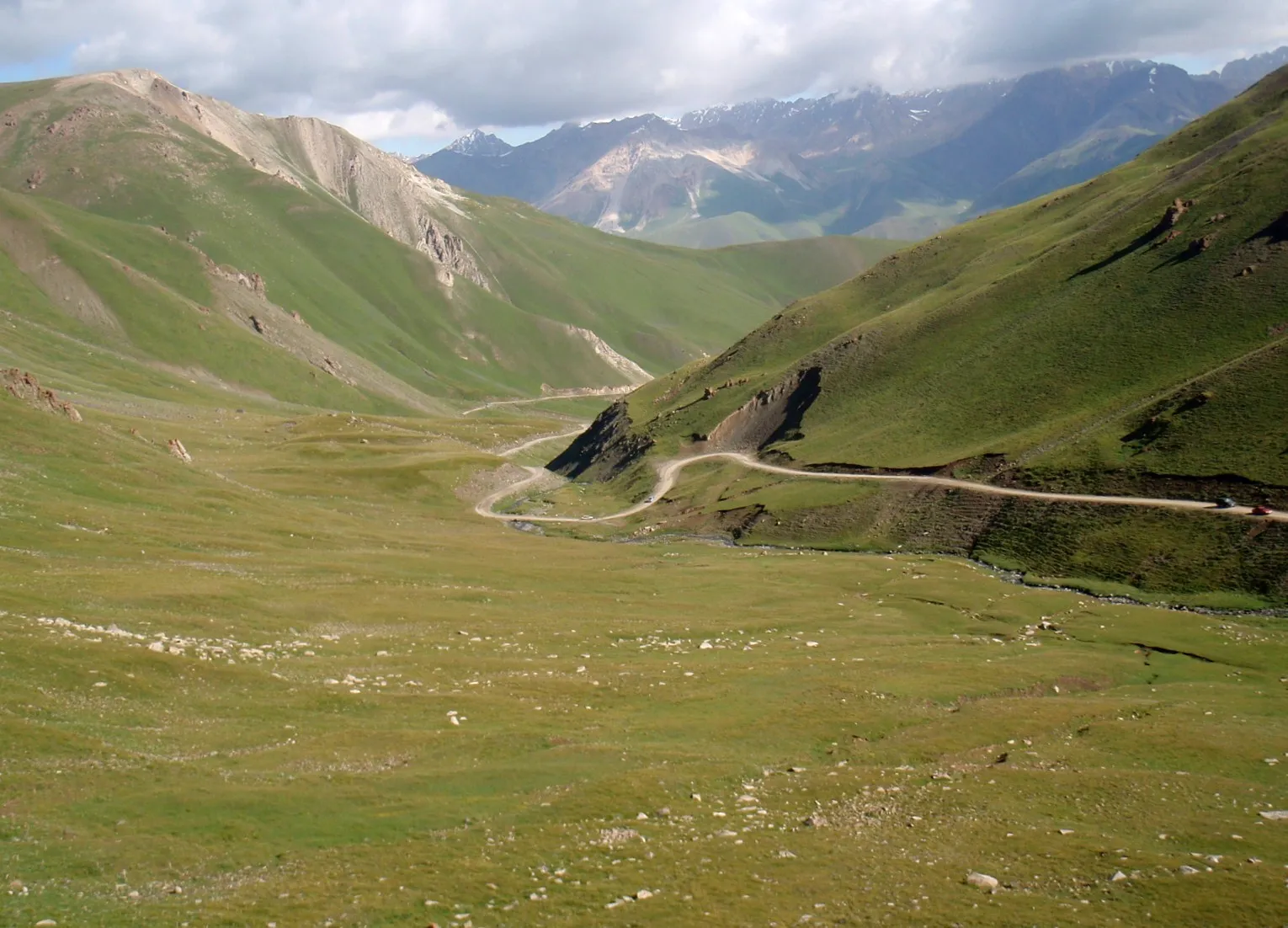
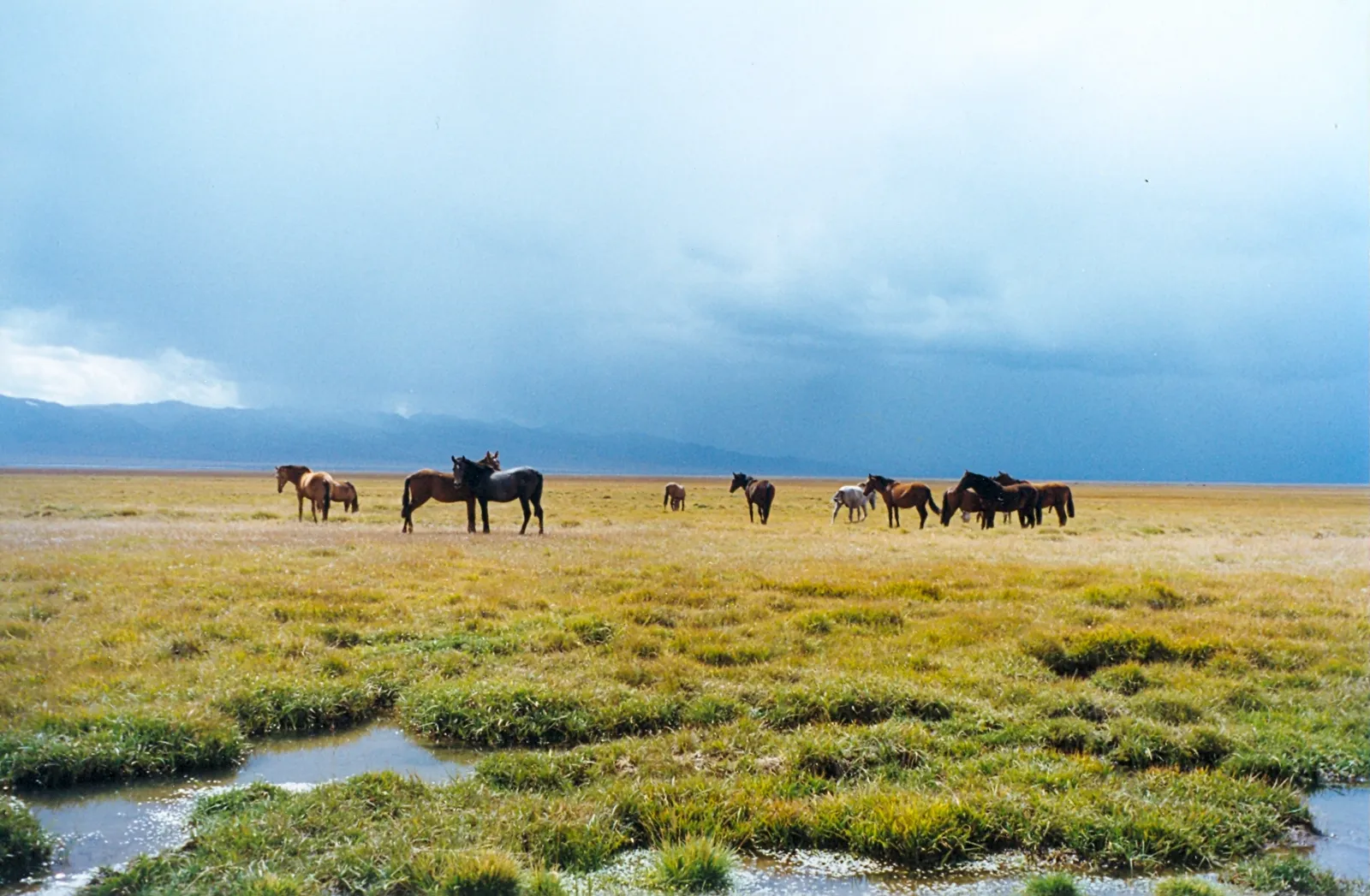
The drive out is long: roughly 300 km and about seven hours from Bishkek, climbing from 800 m in the Chuy valley to 3,016 m at the lake, with the gravel switchbacks of the Kalmak-Ashuu pass (3,446 m) in the last hour. It breaks in Kochkor, where a felt-making family shows how a shyrdak is cut, laid and stitched by hand. The middle day belongs to the horses: herders ride out with visitors for an hour or for the day across pasture with no fences on it, and the camps arrange a display of ulak-tartysh, the game played on horseback with a goat carcass. Burana, the 11th-century minaret in the Chuy valley, sits near the road out and can be added to the first morning.
Altitude and comfort
You gain more than 2,000 m in one day, and on a trip this short that is the thing to plan for. Take the first afternoon at Song-Kul slowly and expect a broken first night. A headache and breathlessness on a slope are ordinary up there; anything sharper and the answer is to go down, which takes about three hours.
The camp is felt walls, mattresses and blankets on the floor, and a stove lit before bed that goes out by morning. Nothing there runs on mains power, there is nowhere to buy anything or draw money, the toilet is outdoors and the signal is thin. Nights drop below freezing even in July, so a hat, gloves and something windproof matter more than anything else you pack.
When it runs
Camps go up around the middle of June and are gone by about the middle of September, and the surest weeks fall in July and August. The road over the pass is normally open from the end of May until heavy snow returns in October. Outside the season there is nothing at the lake to sleep in and no herders on the pasture, which is most of the point of going.
Changing it
A third night at the lake is the change people most often wish they had made. Riders can come in from Kyzart instead of driving, two or three days across the pastures. Leaving by the southern road towards Naryn opens up the caravanserai at Tash-Rabat; going out through the Suusamyr valley to Kyzyl-Oi makes a loop of it.
Day by day
The route
Day 1
Bishkek to Song-Kul
Overnight: Song-Kul
- 4x4 with driver, up to 4 passengers
- Kochkor: shyrdak felt carpet demonstration
- Song-Kul: lunch or dinner at the camp
- Song-Kul: bed in a shared yurt with breakfast
Day 2
A day on horseback
Overnight: Song-Kul
- 4x4 with driver, up to 4 passengers
- Song-Kul: full-day horse ride
- Song-Kul: traditional horse games show
- Song-Kul: lunch or dinner at the camp
- Song-Kul: bed in a shared yurt with breakfast
Day 3
Song-Kul to Bishkek
- 4x4 with driver, up to 4 passengers
- Kochkor: lunch or dinner at the hotel
What the price includes
- —Two nights in a family yurt camp on the shore of Song-Kul
- —A 4x4 with a driver for all three days, Bishkek to Bishkek
- —Felt-making demonstration with a shyrdak family in Kochkor
- —A full day on horseback with a herder on the summer pastures
- —A display of ulak-tartysh, the traditional horseback game
- —Breakfast at the camp and a hot meal each day at the lake
- —Lunch in Kochkor on the way back to the capital
Not included
- —International flights to and from Kyrgyzstan
- —A visa, if your nationality needs one
- —Travel insurance
- —Meals not listed above, and all drinks
- —Personal spending and souvenirs
- —Tips for the driver and the camp family
On this trip
Places you stay
Good to know
Questions travellers ask
- Do I need to be fit for this?
- No. There is no trekking in the three days and nothing you have to walk. The riding day is as long or as short as you want it, and an hour out and back is a normal choice for people who have never been on a horse. What the trip does ask for is tolerance of a seven-hour drive at each end and of a cold night at 3,016 m in a tent of felt.
- Is the altitude a problem on a trip this short?
- It is the one thing worth taking seriously. You go from 800 m in Bishkek to 3,016 m at the lake in a single day, and most people feel something on the first night: a headache, shallow sleep, breathlessness walking uphill from the camp. Keep the first afternoon quiet, drink plenty and eat. If symptoms get worse rather than better, we drive down, and that takes about three hours.
- What are the yurt camps like?
- Family-run and simple. Felt walls on a wooden frame, mattresses and heavy blankets laid on the floor, a stove lit in the evening. Guests often share a yurt. The toilet is a wooden one outside, washing is a basin of hot water, there is no mains electricity, nothing to buy, and the phone signal comes and goes. Meals are cooked by the family and eaten together in the dining yurt.
- When can this trip run?
- Between about 15 June and 15 September, and the middle of that window is the safest bet. Ploughs open the Kalmak-Ashuu pass at the end of May and it stays passable until heavy snow returns in October, but the camps come down well before that, once the herding families take their animals back down to the valleys in September. In winter the lake freezes and there is nowhere to stay.
- Can children come?
- Children who travel well by car often take to the lake better than adults do, and the herding families are used to them. The things to weigh are the altitude, the cold nights and the two long drives, which are hard on small children. Tell us their ages when you write to us and we will say honestly whether we would run it for your family and what we would change.
- I am travelling on my own. Does that work?
- Yes, and solo travellers are common at Song-Kul. Camps sleep guests on mattresses in shared yurts rather than in single rooms, so you would normally be under felt with other people. If you want a yurt to yourself, or you would like to be matched with another party for the drive, say so when you enquire and we will tell you what is possible for your dates.
Your route is one conversation away
Tell us your dates, your pace and what you would like to see. We will put together a route from our own suppliers.