Guides
Horse riding in Kyrgyzstan: rides, seasons and skills
Horse riding in Kyrgyzstan, from an hour with a herder at Song-Kul to a three-day crossing in the walnut forest: what the horses are like, what riders need, and when the pastures open.
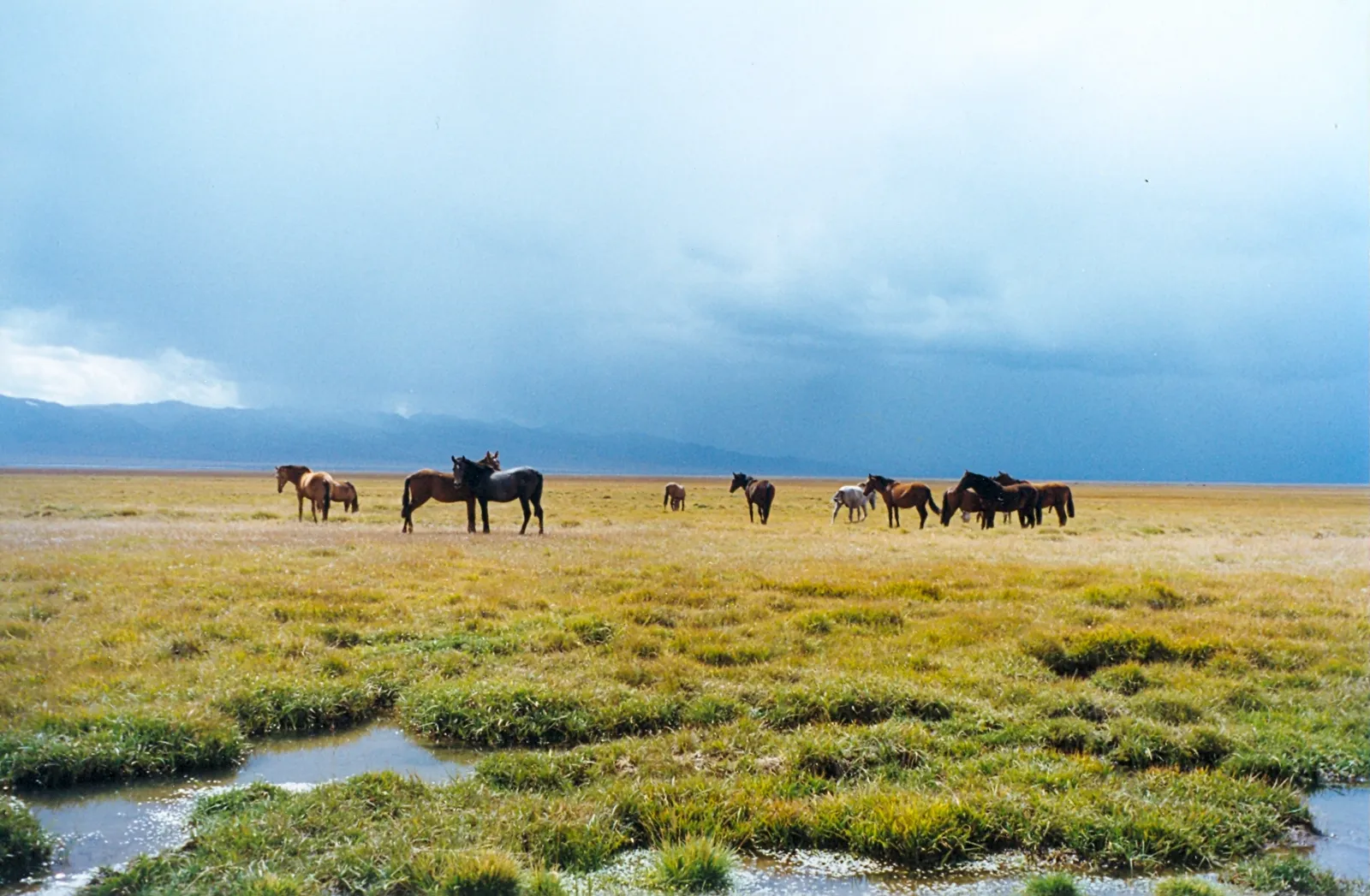
Horses in Kyrgyzstan are the transport that tarmac never replaced. Herding families still ride their animals up to the summer pastures every year, and the rides offered to travellers use those families and those horses.
Kyrgyz mountain horses are small, tough and steady on ground you would rather not walk down. They are working animals: they know the route and have views about the pace. Saddles are often a wooden frame under a blanket, with short stirrups. You ride out with a herder, not in a numbered line, and should not count on a helmet, so bring one if you want it.
An hour, a half-day, a day
Short rides need no experience. Song-Kul, a lake at 3,016 m in a bowl of treeless grassland, is where riding is the obvious thing to do rather than an extra: out with a herder for an hour or a full day, with kok-boru and other horse games at some camps. Jeti-Oguz above Karakol is the other easy base, where families at the upper camps hire horses out and longer rides cross into the next valley.
- Grigorievka gorge and the Barskoon waterfalls: horses by the hour in the meadows, arranged on the spot in summer.
- Altyn-Arashan, Suusamyr and Kyzyl-Oi: camps and guesthouses keep horses and a horseman.
Multi-day rides
Here riding becomes the way you travel. From Arslanbob in the walnut forest the usual route is three days to Holy Lake, two nights out. From Sary-Mogol riders reach Tulpar-Kul, 25 km away, in one or two days. Above Tash-Rabat the pass at 3,800 to 4,000 m is four hours one way and brings Chatyr-Kul into view; riding on to that lake is two days each way, with a border permit. Treks from Kyzart reach Song-Kul in two or three days, and Jyrgalan runs half-days up to pass crossings.
The season
Riding follows the pastures. June to September is the dependable window almost everywhere, because that is when the herders and their horses are up on the jailoo. The Song-Kul camps run from about mid-June to mid-September, the Alay camps to the end of September; Arslanbob is lower, roughly May to October. Outside that the horses are back in the villages. When to go has the calendar.
What you need to be able to do
For an hour or a day at a walk, nothing beyond mounting, staying balanced and doing what the horseman says. Multi-day rides ask more.
- Six or more hours in the saddle on consecutive days.
- Steep descents where you dismount and lead the horse down.
- River crossings, loose ground and long stretches in cold wind.
- Being comfortable at a trot, since you will not spend a week walking.
Soreness rather than falling off is the usual complaint. Long trousers without an inside-leg seam, closed shoes with a small heel and gloves help most.
Nights and altitude
Multi-day rides sleep in yurt camps or tents, and much of the riding country is above 3,000 m, where nights fall below freezing even in July. Coming up from a city to Song-Kul, Tash-Rabat or the Alay, expect a headache, broken sleep or breathlessness on the first day; that is common and settles with a slow start and plenty of water. Symptoms that worsen instead of easing — a headache that will not shift, vomiting, confusion, an unsteady walk — are serious, and the answer is to go down without waiting. Speak to your doctor beforehand if you take regular medication or have a heart or lung condition. Staying in a yurt describes the camps.
The guided version
Rides are arranged through the families who own the horses, which is why they are awkward to book from abroad and simple to organise on the ground. Our three-day Song-Kul trip is built around a full day on horseback and horse games; the ten-day nomad route adds an hour in the saddle at Tash-Rabat.
Good to know
Questions travellers ask
- Do I need riding experience in Kyrgyzstan?
- Not for an hour or a day at a walking pace, which is what most camps offer. You need to be able to mount, stay balanced and do what the horseman says. Multi-day treks are different: they mean six or more hours in the saddle on consecutive days, steep descents you lead the horse down, and river crossings, so being comfortable at a trot matters.
- Where is the best horse riding in Kyrgyzstan?
- Song-Kul at 3,016 m is the obvious one, a treeless bowl of pasture where herders ride out with visitors for an hour or a full day and some camps arrange horse games. Jeti-Oguz above Karakol and the Jyrgalan valley are the other easy bases. For multi-day riding, Arslanbob, the Alay valley around Sary-Mogol and Tash-Rabat are the usual starts.
- When is the horse riding season?
- June to September almost everywhere, because that is when the herders and their horses are up on the summer pastures. The Song-Kul camps run from about mid-June to mid-September and the Alay camps from mid-June to the end of September. Arslanbob is lower and works from roughly May to October. Outside that the horses are back in the villages and the passes hold snow.
- What are the horses and saddles like?
- Kyrgyz mountain horses are small, hardy and sure-footed on ground most people would not walk down. They are working animals that know the route and set their own pace on rough sections. Saddles are frequently a wooden frame under a blanket with short stirrups, which is less forgiving than a leather saddle. Do not count on being offered one; bring your own if you want it.
- Where do you sleep on a multi-day horse trek?
- In yurt camps run by herding families, or in tents where there is no camp, and sometimes in village guesthouses on the lower routes. Facilities are basic: no mains power, an outdoor toilet, meals cooked by the household. Much of the riding country sits above 3,000 m, where nights drop below freezing even in July, so a warm sleeping layer is worth carrying.
- Is horse riding at altitude a problem?
- It can be, since Song-Kul, Tash-Rabat and the Alay routes are all above 2,900 m. Headache, broken sleep and breathlessness on the first day are common and normally pass. Symptoms that worsen — a headache that will not shift, vomiting, confusion, an unsteady walk — are serious and mean going down straight away. Speak to your own doctor before travelling if you have any medical condition.
Guides
Read next
Staying in a yurt in Kyrgyzstan: what it is really like
What a night in a Kyrgyz yurt camp actually involves: felt walls and floor mattresses, no mains power, an outdoor toilet, freezing nights at 3,000 m and a herding family cooking next door.
Kyrgyzstan in winter: what is open and where to ski
Kyrgyzstan in winter: what closes from October, where the backcountry skiing is, why Issyk-Kul never freezes, and which passes stay open once the yurt camps have come down.
What to pack for Kyrgyzstan
Kyrgyzstan asks you to dress for a 30-degree afternoon in the Fergana valley and a night close to freezing at 3,000 m, often in the same week.
Your route is one conversation away
Tell us your dates, your pace and what you would like to see. We will put together a route from our own suppliers.
Photos: Photo: User:Doron / CC BY-SA 3.0