Jalal-Abad · Kyrgyzstan
Saimaluu-Tash Petroglyphs
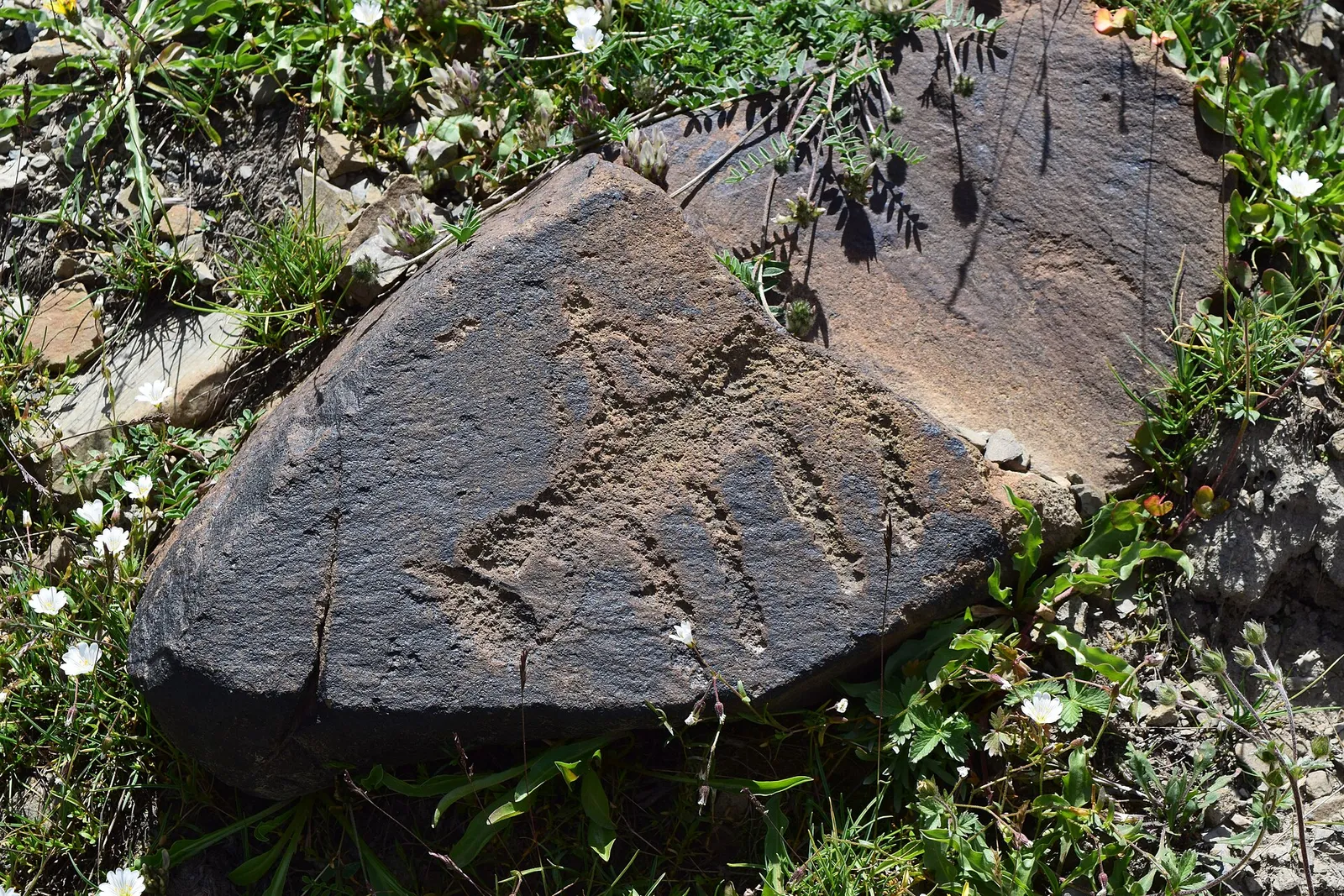
Saimaluu-Tash is a high valley in the Fergana Range at about 3,200 m where more than 10,000 stones carry petroglyphs from the Bronze Age onward, showing animals, hunters and ploughing scenes. The site lies in a nature park about 30 km south of Kazarman and is on UNESCO's tentative list. Snow keeps it closed most of the year; the usual window is mid-July to August. Visitors drive from Kazarman to the Kok-Art river and continue on foot or on horseback for three to five hours, often camping overnight.
- Region
- Jalal-Abad
- Altitude
- 3,200 m
- Roads
- 4x4 only
Saimaluu-Tash, "patterned stones", is a high valley in the Fergana Range at about 3,200 m where more than 10,000 boulders carry carvings made from the Bronze Age onward: ibex and deer, hunters, chariots and teams of animals drawing ploughs. It is one of the largest concentrations of rock art in Central Asia, sits on UNESCO's tentative list, and is protected as a nature park about 30 km south of Kazarman. Nothing about visiting it is casual, and that is the main thing to understand before planning.
The approach From Kazarman a 4x4 covers about 38 km of rough track to the trailhead on the Kok-Art river, roughly two hours. From there it is about five hours on foot, or four and a half to five hours on horseback, up to the carvings, and around three hours back down. The whole distance from Kazarman is only 51 km, but it is a day's travel in each direction, there is no shelter at the top, and the standard trip is an overnight with tents in the valley. Horses, horsemen and guides are arranged in Kazarman.
Season The park season runs from 15 June to 30 September, and snow blocks the route outside it and often well inside it. July and August are the months that are reliably clear; in early summer the upper valley can still be under snow. At 3,200 m, cold rain, wind and fresh snow are possible in any summer month, so pack for weather rather than for the Fergana valley you drove up from.
Getting to Kazarman Kazarman is the base, and reaching it is half the journey. From Jalal-Abad it is 130 km and about four hours over the Kaldama pass at roughly 3,000 m, a broken gravel road with narrow switchbacks that needs a 4x4 and is open from around June to September. From Naryn it is 223 km and about seven hours on gravel. From Song-Kul it is 220 km and about six hours over the Moldo-Ashuu and Kara-Koo passes, closed from roughly November to March. A new north-south road through Kazarman has been under construction, so check current conditions before you commit to a date.
Practical notes - The park charges an entrance fee, with a separate charge for a tent, paid on site in cash. No border-zone permit is needed for this area. - Nothing is sold in the valley. Carry food, water, warm layers and shelter, or have the horses carry them. - The climb gains height quickly to about 3,200 m. If you have come straight up from the Fergana valley, go slowly and expect to feel it. - Do not chalk, wet, rub or stand on the carved stones. Many are in the open with nothing protecting them but the altitude.
Good to know
Questions travellers ask
- When can you visit Saimaluu-Tash?
- The park season is 15 June to 30 September, but snow decides the real window. July and August are the months that are dependably clear; in June the upper valley often still holds snow, and by late September new snow can close it again. At about 3,200 m, cold rain and fresh snow are possible in any summer month.
- Can the petroglyphs be seen in one day from Kazarman?
- It is a long day at best and most people do not try. A 4x4 takes about two hours to cover the 38 km of track to the Kok-Art trailhead, then it is roughly five hours up on foot or four and a half to five on horseback and about three hours back down. The normal trip is an overnight in the valley with tents.
- Do you need a horse, or can you walk?
- Both work. Walking up takes about five hours from the trailhead at the Kok-Art river; riding takes four and a half to five hours, and roughly three hours to come back down. Horses, horsemen and guides are hired in Kazarman, and even walkers usually take a horse to carry tents, food and water for the overnight.
- How do you get to Kazarman?
- From Jalal-Abad it is 130 km and about four hours over the Kaldama pass at roughly 3,000 m, on broken gravel with narrow switchbacks that needs a 4x4 and is open around June to September. From Naryn it is 223 km and about seven hours on gravel, and from Song-Kul 220 km and about six hours over two passes that close from roughly November to March.
- Do you need a permit for Saimaluu-Tash?
- No border-zone permit applies here; those are required in other parts of the country, such as the Kel-Suu and Torugart areas of Naryn region. For Saimaluu-Tash you pay the nature park entrance fee on site, in cash, plus a separate charge if you pitch a tent. Bring som with you from Kazarman or Jalal-Abad.
- What is actually carved on the stones?
- More than 10,000 boulders in the valley carry images cut from the Bronze Age onward: ibex, deer and other animals, hunting scenes, chariots, and teams of oxen drawing ploughs, which are among the site's best-known panels. The carvings lie in the open across a high basin, so seeing them means walking the ground rather than viewing an exhibit.
Kyrgyzstan
More places
Your route is one conversation away
Tell us your dates, your pace and what you would like to see. We will put together a route from our own suppliers.