Issyk-Kul · Kyrgyzstan
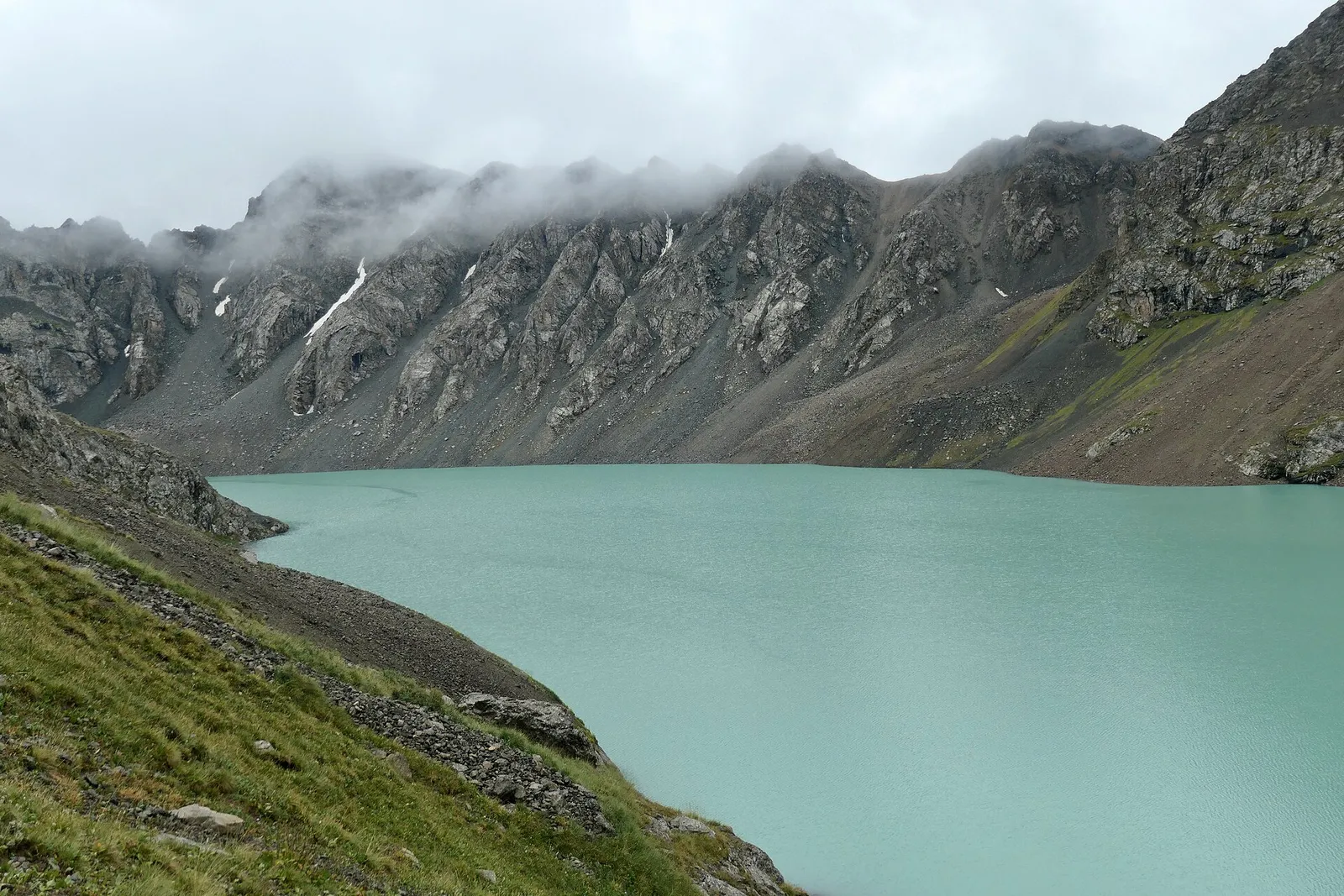
Ala-Kul
Ala-Kul is a glacial lake at about 3,560 m in Karakol National Park, fed by the glaciers of the Terskey Ala-Too range. It can only be reached on foot, usually on a two- or three-day trek that starts in the Karakol gorge, climbs past the Sirota camp and crosses the Ala-Kul pass at around 3,900 m before descending to Altyn-Arashan. Fit hikers can visit it on a long day trip with a guide. The trail is normally free of snow from July to mid-September, and a park entry fee applies.
- Region
- Issyk-Kul
- Altitude
- 3,560 m
- Roads
- Any car
What Ala-Kul is
Ala-Kul is a glacial lake at about 3,560 m in Karakol National Park, held in a rock basin below the glaciers of the Terskey Ala-Too. The water runs from milky turquoise to deep blue depending on the light and the melt. There is no road to it and no way to shorten the approach: everyone who sees it walks there, which is why the lake is usually the high point of a multi-day trek rather than an outing.
The usual route
Most people start at the mouth of the Karakol gorge, south of town, and walk up the river through spruce forest. From the trailhead to the Sirota camp is 16 to 18 km and takes five to eight hours. From Sirota to the lake is a further 3 to 8 km, depending on the line taken, with 600 to 1,000 m of climbing and two to six hours of walking. From the lake the trail crosses the Ala-Kul pass at about 3,860 to 3,950 m, then drops into the Altyn-Arashan valley, where there are hot springs and beds. Done that way the trek takes two or three days. Fit walkers with a guide and a vehicle transfer sometimes reach the lake and return in one long day.
When to go
The trail is normally clear of snow from around the start of July to the middle or end of September; late June is possible in a warm year. Yurt camps on the route are staffed mainly in July and August. Outside that window the pass holds snow and the descent becomes dangerous. Snow and hail can still fall at the lake in midsummer.
What it takes
- The pass is steep and loose on the Altyn-Arashan side, and the last climb to it is the hardest part of the trek.
- At 3,560 m and higher, altitude is felt. Spend a night or two around Karakol first and walk slowly.
- Camping is allowed and common; nights near the lake are below freezing, so a proper sleeping bag matters.
- A park entry fee is collected at the trailhead, in cash, in som.
- There is no mobile signal for most of the route and no shelter on the pass in bad weather.
Good to know
Questions travellers ask
- How hard is the Ala-Kul trek?
- It is a demanding mountain walk rather than a technical climb. The first day from the Karakol gorge to the Sirota camp is 16 to 18 km and five to eight hours; the climb to the lake adds 600 to 1,000 m. The pass above the lake, at about 3,860 to 3,950 m, is steep and loose on the far side. Altitude, weather and the long descent are what make it hard.
- How many days do I need for Ala-Kul?
- Two or three days is standard: up the Karakol gorge, a night near the Sirota camp or at the lake, then over the pass and down to Altyn-Arashan, sometimes with a further night at the hot springs. Fit walkers who hire a guide and a vehicle transfer to the trailhead occasionally do the lake and back in one long day.
- When can Ala-Kul be visited?
- Roughly from the start of July to the middle or end of September, with late June possible after a warm spring. Outside that window the pass holds snow and the crossing is risky. The yurt camps along the route are staffed mainly in July and August, so earlier or later you should be ready to camp and carry your own food.
- Can I reach Ala-Kul without hiking?
- No. There is no road, no jeep track and no horse shortcut to the lake itself, and the only approaches are the Karakol gorge and the pass from Altyn-Arashan. Horses can carry baggage on parts of the route, but you still walk. If you want mountains and hot springs without the climb, Altyn-Arashan alone is the alternative.
- Do I need a guide for Ala-Kul?
- Not by law, and the trail is well used in season. A guide is still worth it for the pass, where the route is less obvious in cloud or old snow and the descent is steep and loose. Guided trips from Karakol also cover the transfer to the trailhead, food and the park fee, which saves organising each piece separately.
- Is there a fee for Karakol National Park?
- Yes. An entry fee for Karakol National Park is collected at the trailhead in the Karakol gorge. It is paid in cash in som, and there is nowhere to change money or use a card on the route, so bring it with you. Camping in the park is permitted and is what most trekkers do outside the July and August yurt season.
Kyrgyzstan
More places
Your route is one conversation away
Tell us your dates, your pace and what you would like to see. We will put together a route from our own suppliers.