Guides
Ten days in Kyrgyzstan: north and centre
Ten days is where the country stops being a lake trip: the extra days buy the pastures of Song-Kul, the Naryn valley and the caravanserai at Tash-Rabat, with Issyk-Kul as the second half.
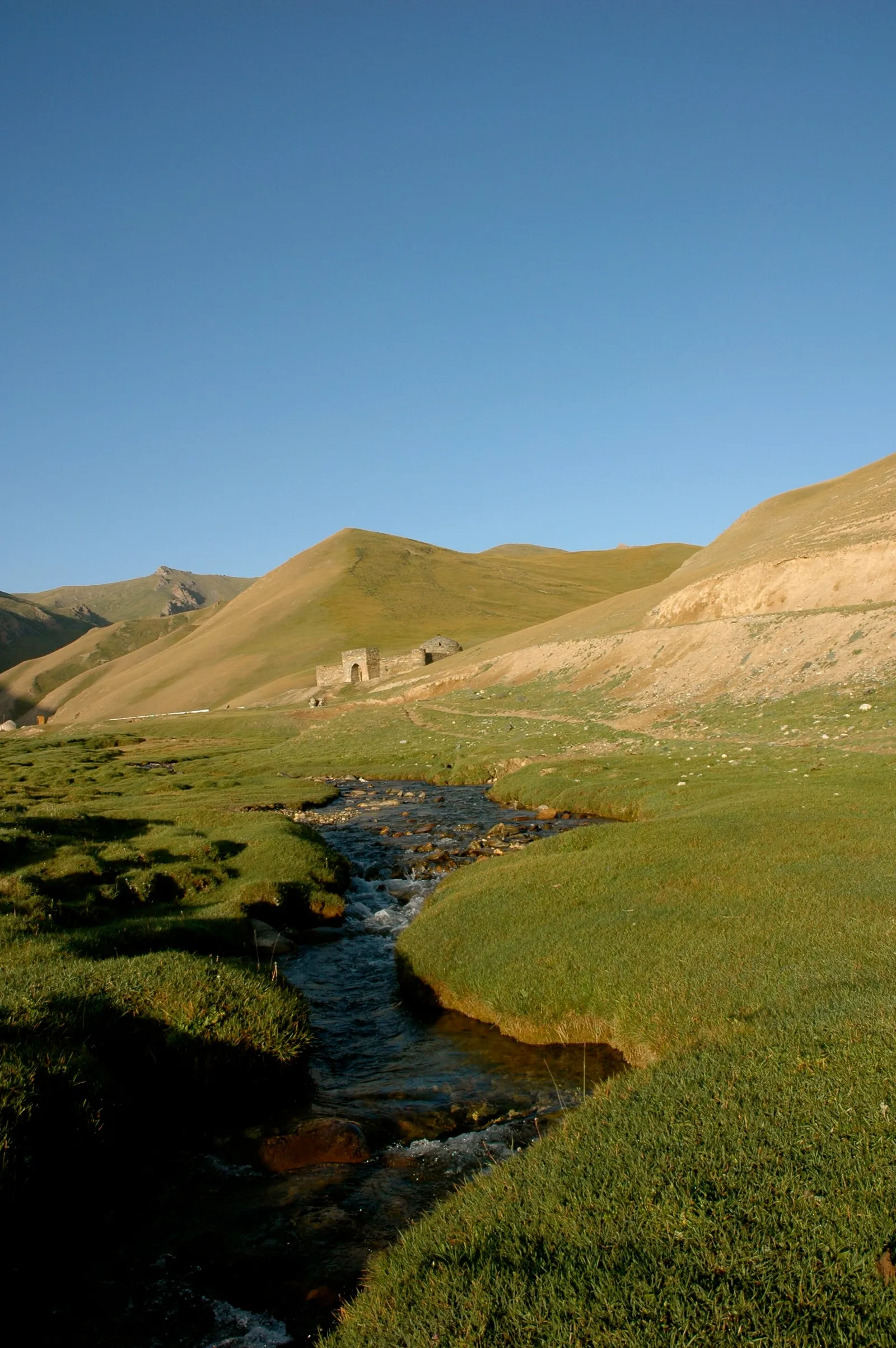
Ten days is the point where Kyrgyzstan stops being a lake trip. The three days beyond a week buy the centre of the country: the pastures at Song-Kul, the valley town of Naryn, and the stone caravanserai at Tash-Rabat on the old road towards Kashgar. Issyk-Kul is still there, but as the second half of the trip rather than the whole of it. That is the shape of our ten-day route.
The route, day by day
- Day 1. Arrive in Bishkek and sleep at valley level.
- Day 2. East to the Burana tower, then south through the Boom gorge to Kochkor, about four hours in all.
- Day 3. Over the Kalmak-Ashuu pass to Song-Kul: 90 km, three hours of gravel, four-wheel drive.
- Day 4. A day on horseback across the pastures, and a second night in the yurt camp.
- Day 5. Down the Terskey-Torpok switchbacks to Naryn, 100 km in about four hours.
- Day 6. South to Tash-Rabat, 115 km and three hours, with a night in a yurt beside it.
- Day 7. Back north through Naryn to Kochkor, about five and a half hours.
- Day 8. West to the southern shore: an eagle hunter near Bokonbaevo, then Skazka canyon.
- Day 9. The Barskoon waterfalls, then east to Karakol.
- Day 10. The northern shore back to Bishkek, 398 km and six and a half hours.
Burana, an eleventh-century minaret standing alone in the Chuy valley, costs nothing but a stop on the way south. Karakol arrives late in this version, so the eastern lake gets one night rather than three.
Hours in the car
Days five and seven are mountain days spent mostly moving: Song-Kul to Naryn is only 100 km but four hours over a pass at 3,132 m, and the return from Tash-Rabat through Naryn to Kochkor is 115 km plus 122 km, near enough five and a half hours. Days four and six are almost free of driving, and day eight is short hops: Kochkor to Bokonbaevo is 118 km and two and a half hours, the canyon another 34 km east.
If you only have a week
Cut Naryn and Tash-Rabat. Without them the route folds back into the classic seven days: Bishkek, the eastern lake, the southern shore, Song-Kul, home. One week in Kyrgyzstan sets that version out day by day. With nine days rather than ten, take out the second night at Song-Kul instead: it is the pleasantest night to lose, but it is a night rather than a day of driving.
Kel-Suu, if you plan far enough ahead
The big addition in this region is Kel-Suu, a lake filling a rock canyon at about 3,514 m south of At-Bashy. It is 150 km from Naryn but five to eight hours by four-wheel drive, with river fords, and it lies inside a border zone. The permit is a stamped paper original, processing takes five to ten working days, your driver needs one, and copies are turned away. Allow two extra days and apply two to three weeks ahead. Tash-Rabat needs no permit at all.
Walking or riding instead of driving
Two driving days can become days on foot or in the saddle. A horse trek from Kyzart reaches Song-Kul in two or three days instead of the three-hour drive, which changes the lake completely; horse riding in Kyrgyzstan explains how those trips work. At the other end, the Ala-Kul crossing out of Karakol takes two or three days and replaces two driving days.
When to go, and what it depends on
Everything above is a summer route. The Song-Kul camps run from about mid-June to mid-September, the Tash-Rabat camps from June to September, and Kel-Suu opens later and closes earlier than either. Kalmak-Ashuu is cleared at the end of May and shuts with the first snow in October. The climb from Bishkek to 3,016 m inside two days catches people out, so take the first afternoon at the lake slowly. When to go and two weeks in Kyrgyzstan cover the alternatives.
Good to know
Questions travellers ask
- What do the extra three days buy over a week?
- The centre of the country. A week has to choose between Issyk-Kul and the high plateau south of it; ten days takes both, adding two nights at Song-Kul, the Naryn valley and the caravanserai at Tash-Rabat at about 3,200 m. The cost is that Karakol and the eastern lake get one night instead of three.
- How long is the drive from Song-Kul to Naryn?
- About four hours for only 100 km, because the road drops off the plateau on the Terskey-Torpok switchbacks at 3,132 m and none of it is fast. It is a scenic morning rather than a transfer, and it is one of three days on this route where most of the daylight is spent in the car.
- Can I add Kel-Suu to a ten-day trip?
- Only if you start early. Kel-Suu is 150 km from Naryn but five to eight hours by four-wheel drive with river fords, so it needs two extra days, and it lies in a border zone. The permit is a stamped paper original, takes roughly five to ten working days to process, and your driver needs one too, so apply two to three weeks ahead.
- Is Tash-Rabat worth the driving?
- It is the reason the route goes south at all. The caravanserai sits at about 3,200 m in a side valley 115 km and three hours from Naryn, needs no permit, and the yurt camps beside it let you walk or ride into the hills above. If you would rather not spend two days getting there and back, a week-long route is the honest alternative.
- How many nights should I spend at Song-Kul?
- Two. One night means arriving in the late afternoon and leaving after breakfast, which gives you an evening and no more. The second night releases a full day for riding out with a herder or walking the ridges above the shore, and it is the last thing to cut when days go missing.
- What is the longest driving day?
- The last one: 398 km and about six and a half hours from Karakol along the northern shore to Bishkek. It is paved the whole way, but it runs through a long string of villages with speed limits and radar, and sections of that road have been under reconstruction, so allow more than the distance suggests.
Guides
Read next
Two weeks in Kyrgyzstan: the whole country
A fortnight either covers the north without rushing anything, or splits into eight or nine days in the north and a flight south to Osh, the Alay valley and the walnut forest of Arslanbob.
Trekking in Kyrgyzstan: routes, seasons and altitude
Trekking in Kyrgyzstan, from a level river path in Ala-Archa to the pass above Ala-Kul at nearly 4,000 m: which routes suit which level, when the snow clears, and what the nights ask of you.
Horse riding in Kyrgyzstan: rides, seasons and skills
Horse riding in Kyrgyzstan, from an hour with a herder at Song-Kul to a three-day crossing in the walnut forest: what the horses are like, what riders need, and when the pastures open.
Your route is one conversation away
Tell us your dates, your pace and what you would like to see. We will put together a route from our own suppliers.