5 days
Around Issyk-Kul, 5 days
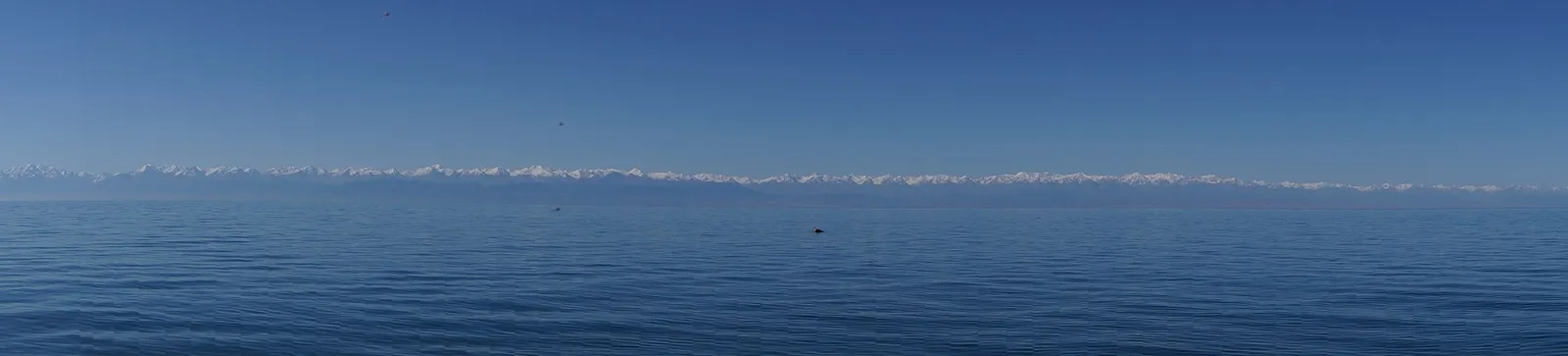
Petroglyphs at Cholpon-Ata, Karakol and its Dungan kitchen, a night by the Altyn-Arashan hot springs, the Barskoon waterfalls, Skazka canyon and an eagle hunter on the south shore.
Five days around the lake, with a night in a hot-spring valley in the middle of them. This is the gentlest of our longer routes: the walking comes in one- and two-hour stretches, the highest bed is at 2,450 m, and the interest lies as much in the towns and the food as in the mountains. It suits a mixed party or a first trip to Central Asia.
What the days feel like
Cholpon-Ata on the northern shore is the resort end of the lake, with a field of glacial boulders on its edge carved with ibex, hunters on foot and men on horses, from the Bronze Age into the early medieval centuries. Karakol, at the eastern end, is a grid of wide streets, poplars and carved window frames, a wooden cathedral and a mosque built by a Chinese architect; the Dungan families who settled here in the 19th century are why the cooking tastes unlike anywhere else in the country, and one of them cooks dinner for travellers. The southern shore is drier and emptier: clay towers eroded into fins at Skazka canyon, a spruce gorge climbing to the waterfalls above Barskoon at about 2,500 m, and an eagle hunter working his bird by the shore.
How hard it is
No day asks more than a couple of hours on foot. The effort is in the driving: about four hours out from the capital, two and a half along the north shore to Karakol, and a rough three hours each way on the 30 km track to Altyn-Arashan, in an old 4x4 truck over rock and river crossings. Nothing on the route reaches an altitude that needs acclimatising for.
Where you sleep
A guesthouse room on the north shore, a hotel room in Karakol with a proper shower, and two nights in yurts: one in the hot-spring valley, where the water is piped into small bathhouses, and one at a camp on the south shore. The valley has no mains power, no shop and no reliable signal, so carry cash in som.
When it runs
June to September is the dependable season. The lake road is open all year, but the gorge above Barskoon needs the gravel clear of snow, and the hot-spring camps are staffed from late June. July and August are warm enough to swim in and busiest on the shore; September is quieter.
Changing it
The loop stretches easily. A second night in Karakol buys time for the Sunday animal market; two at the hot springs make room for a walking day towards the glaciers under Palatka peak. Travellers who want marked trails add Jyrgalan, two hours east. Ask us and we shift the nights.
Day by day
The route
Day 1
Bishkek to Cholpon-Ata
Overnight: Cholpon-Ata
- Car with driver, up to 4 passengers
- Cholpon-Ata: Ruh Ordo cultural centre entrance
- Cholpon-Ata: guesthouse room for two with breakfast
- Cholpon-Ata petroglyphs open-air museum entrance
Day 2
Karakol and a Dungan dinner
Overnight: Karakol
- Karakol: double room in a small hotel with breakfast
- Karakol: private city and food walk with a local guide
- Przhevalsky museum entrance near Karakol
- Car with driver, up to 4 passengers
- Dungan family dinner in Yrdyk village
Day 3
Altyn-Arashan hot springs
Overnight: Altyn-Arashan
- Altyn-Arashan hot springs access
- Altyn-Arashan: night in a yurt with breakfast
- Altyn-Arashan: dinner at the yurt camp
- 4x4 jeep transfer Karakol to Altyn-Arashan, up to 4
- Car with driver, up to 4 passengers
Day 4
Jeti-Oguz and the Barskoon waterfalls
Overnight: Tamga
- 4x4 jeep transfer Karakol to Altyn-Arashan, up to 4
- Car with driver, up to 4 passengers
- Tamga: bed in a shared yurt, half board
Day 5
Skazka canyon, an eagle hunter and back to Bishkek
- Skazka canyon entrance
- Car with driver, up to 4 passengers
- Eagle hunter demonstration
What the price includes
- —Four nights: a guesthouse, a hotel room and two nights in yurt camps
- —A car with a driver throughout, plus the 4x4 truck to the hot springs
- —Guided walking tour of Karakol, about four hours
- —Entry to the Cholpon-Ata petroglyph field, Ruh Ordo and the museums
- —Dinner cooked by a Dungan family in the village of Yrdyk
- —Hot spring bathing and dinner at the Altyn-Arashan camp
- —Eagle hunter demonstration and entry to Skazka canyon
- —Breakfast daily and half board at the camp on the south shore
Not included
- —International flights to and from Kyrgyzstan
- —A visa, if your nationality needs one
- —Travel insurance
- —Lunches and the dinners not listed above, and all drinks
- —Boat trips, beach charges and personal spending
- —Tips for the driver, the guide and the camp families
On this trip
Places you stay
Good to know
Questions travellers ask
- How much walking is there?
- An hour or two at a time, and none of it obligatory. The canyon takes one to two hours of wandering up gullies and along ridges, the Barskoon falls are a short steep path from the road, and the towns are flat. Anyone comfortable on their feet for a couple of hours on uneven ground will manage the whole route. If you want longer days on foot, we can add them in the valleys above Karakol.
- Is the altitude an issue?
- Not really. The lake itself sits at about 1,650 m, the highest night is 2,450 m in the hot-spring valley, and the waterfalls above Barskoon are around 2,500 m. Those are heights at which some people notice they are a little breathless on a climb, but they are well below the range where altitude sickness is a normal concern. Nights up the valley are cold all the same.
- What is the drive to the hot springs like?
- Rough, slow and memorable. It is 30 km from Karakol and takes about three hours in a Soviet-era 4x4 truck, over broken rock and through river crossings, with everyone shaken about in the back. An ordinary car cannot make it. If that does not appeal, the same valley can be walked in from Ak-Suu village instead, around 15 km on foot with some 1,200 m of climbing, and we can arrange that.
- When is the best time to go?
- June to September. July and August are the warm months when the lake is swimmable and the north shore is at its busiest, with crowds from Bishkek and Kazakhstan at weekends. June and September bring fewer people, cooler air and better walking in the gorges. The gorge road to the Barskoon falls depends on snow and ice being off the gravel, which is why we do not run this route in winter.
- Can we change the route or the dates?
- Within the season the dates are built around when you can travel rather than a published calendar, and the days themselves are movable: more time in Karakol, a second night at the hot springs, a detour to the Grigorievka gorge. Once rooms and camp beds are held, what can still be changed depends on the places holding them, so ask us early and we confirm it before you pay.
- Does this work for a family or an older traveller?
- For most of it, yes. The walking is short, the towns are easy and the lake is warm in high summer. The two things to consider are the truck ride to the hot springs, which is genuinely bumpy and takes three hours each way, and the yurt nights, which mean mattresses on the floor and an outdoor toilet. Tell us who is travelling and we will suggest what to change.
Your route is one conversation away
Tell us your dates, your pace and what you would like to see. We will put together a route from our own suppliers.